


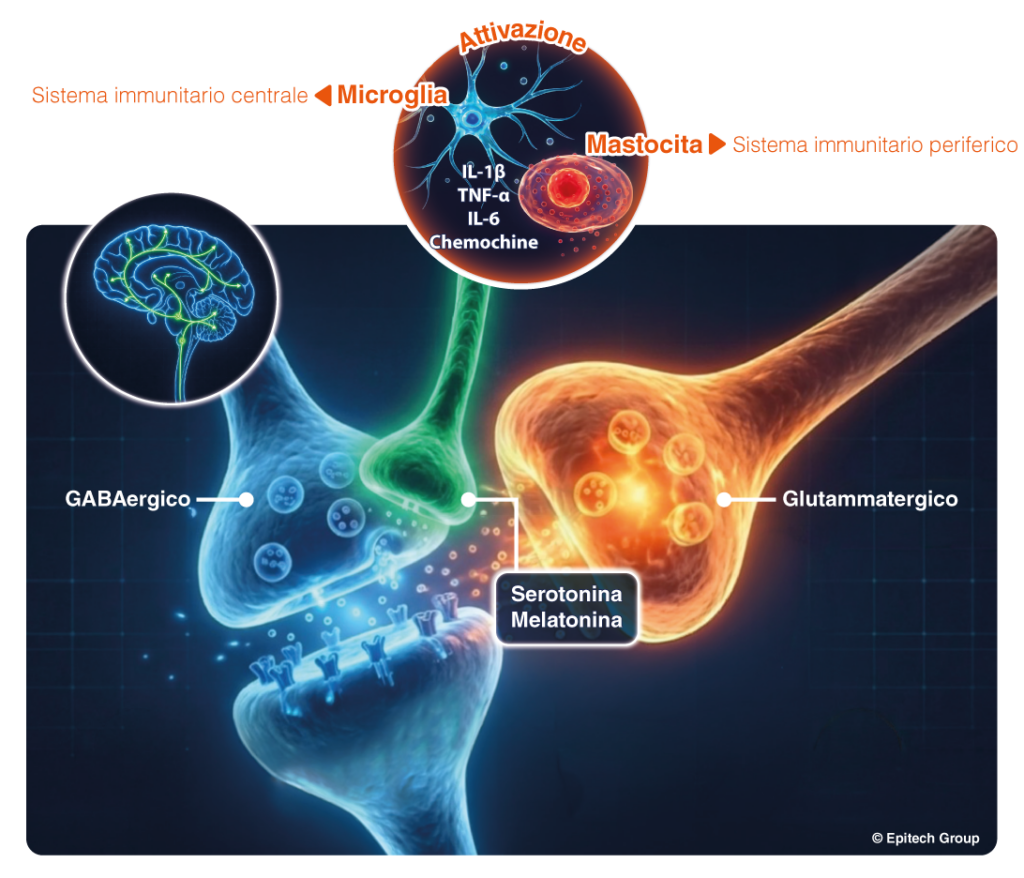
The underlying dysfunction in otoneurologic disorders, often extends beyond the inner ear or the facial region. Even minor alterations in auditory, vestibular and trigeminal pathways can activate the nervous system’s immune cells, namely microglia and mast cells. This can lead to a state of neuroinflammation increasing neuronal sensitivity and altering neuronal function.
When this state persists, the brain may adapt in ways that are detrimental. This process, known as maladaptive plasticity, involves the reorganisation of auditory, vestibular and trigeminal circuits, which continue to generate altered neural signals.
Fluctuations in serotonin and melatonin levels may further contribute to this process. Serotonin plays a key role in regulating mood, while melatonin helps regulate the sleep–wake cycle and protects nerve cells. When their levels fluctuate, symptoms may be perceived more intensely, sleep quality may deteriorate, and a vicious cycle may develop, further exacerbating distress.
Chronic neuroinflammation involves non-neuronal cells, particularly microglia and mast cells, which can disrupt the synaptic microenvironment at both central and peripheral levels.
This highlights the relevance of an approach that aims beyond peripheral mechanisms. It is also necessary to address the central pathways to support the proper functioning of neuromodulation systems.